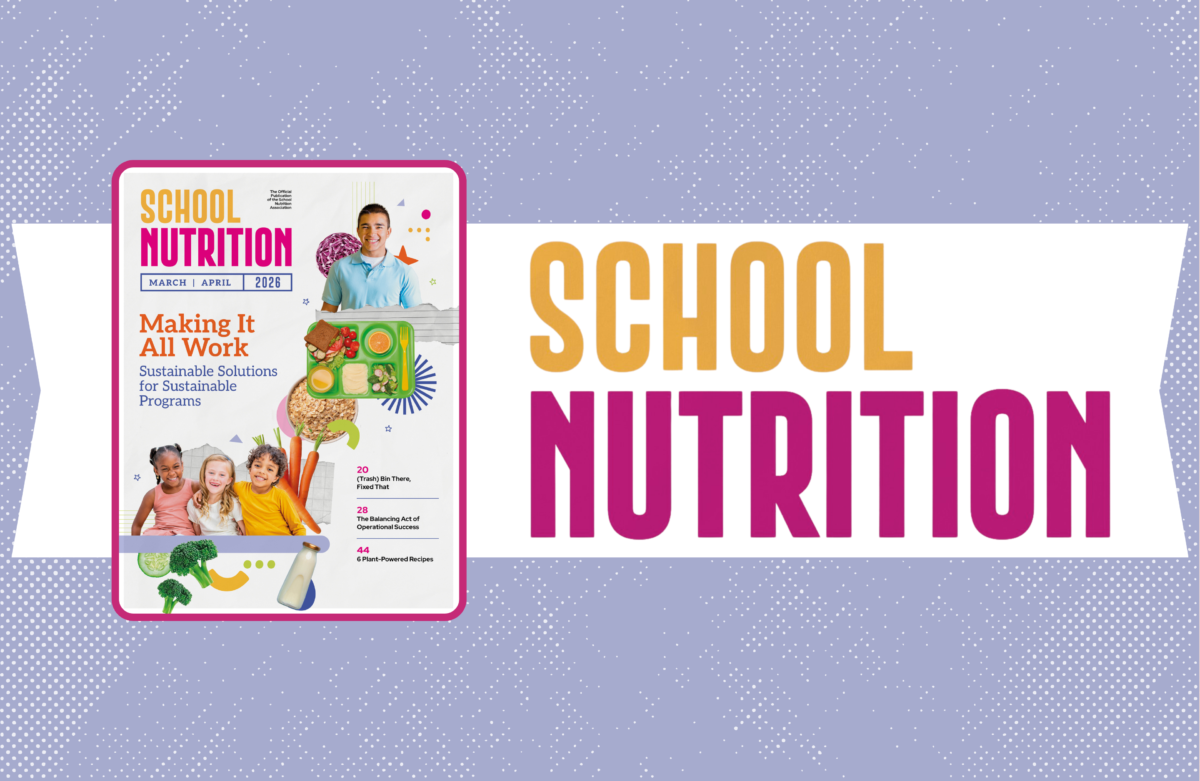
We know your job isn’t easy. There’s a reason school foodservice teams are often hailed as heroes—it’s because you have to do so much with so little, please everyone from student customers to lawmakers, avoid waste and stay practical. On top of that, we know most of you do it with a smile and positive attitude, because you care about your work so much. To make it all work, you often need ingenuity. You need fresh ideas. You need support. No school foodservice program exists on an island by itself, so we’re exploring the advice and advocacy you need when you’re rising to the challenge of making it all work. (We also have details on School Lunch Hero Day, when you can actually recognize the heroism among your team members.) You’ll find this valuable insight in our March/April 2026 issue highlighting these topics:
In addition to professional development and recipe ideas, you look to SNA for advocacy so lawmakers can set you up for success. This breakdown of SNA’s 2026 Position Paper looks at the Association’s formal position on the crucial legislative issues facing us this year, including two important funding bills we hope to see Congress pass. Plus, you’ll hear specific on-the-ground stories from directors on why the actions of Congress make a huge difference all our collective ability to put food on the lunch tray.
Smarter Strategies to Cut Cafeteria Waste
Food waste is a serious problem—when students are served food they don’t want to eat, or when you have more of a specific food or ingredient than you can reasonably use, it ends up in the trash. That’s lost money for your program, but it’s also lost nutrients that could potentially be fueling young learners. These strategies help you figure out how you can reduce waste at every step of your process, whether that’s in how you procure and prepare what food you have in inventory, or in how you offer it versus serve it to the students coming along your lunch line. All these tips will help minimize the waste and ensure more of the food you’re investing in ends up where it should be: in the stomachs of your students.
The Practical Side of Sustainable Meals
What does sustainable mean to you? A sustainable meal program is one that students want to eat, districts can afford and staff can execute—and consistently, day after day. Otherwise, any success is going to be short-term. But pulling off this kind of consistent long-term success is a balancing act. It means finding out exactly what your students want so you can serve meals they’ll eat. It means getting creative about nutrition compliance. It means making the most of your resources, including not only the food you have in inventory but also the labor and equipment available to you. When you’re practical about all of it, you can make progress even when you aren’t perfect.
Farm to School: A Check-In on What’s Working (and What’s Next)
Farm to School goes back to 2004 with the passage of the Child Nutrition and WIC Reauthorization Act, and in the 20 years since then, many school foodservice programs have found success with fresh, locally sourced food on their menus. But even given all that success, there can still be struggle. After all, if it were easy to create a menu entirely out of food from your local farms, you’d be doing a lot more of it. By paying attention to the patterns that lead to success—for example, the longevity of the effort, a self-operating program, or a properly trained staff—you can make sure Farm to School works for your program with minimal complications.
Food Focus: Going Green! (With Plant-Based Eating)
You don’t have to be fully vegetarian or vegan to indulge in plant-based eating—sometimes just one meal or even one menu item can open you and your students up to healthy foods you wouldn’t otherwise try. Plant-based eating can be nutritious and environmentally friendly, as it often emphasizes more vegetables, whole grains, beans, nuts, and other foods that are full of vitamins and minerals while requiring less resources to produce than their meat and dairy counterparts. Learn about some of the ways you can make plants the main character in your next menu with hearty recipes using tofu, tempeh, and beans.
Click here to read the full issue.

Related Articles