Ensure updates to federal school nutrition standards are feasible for schools
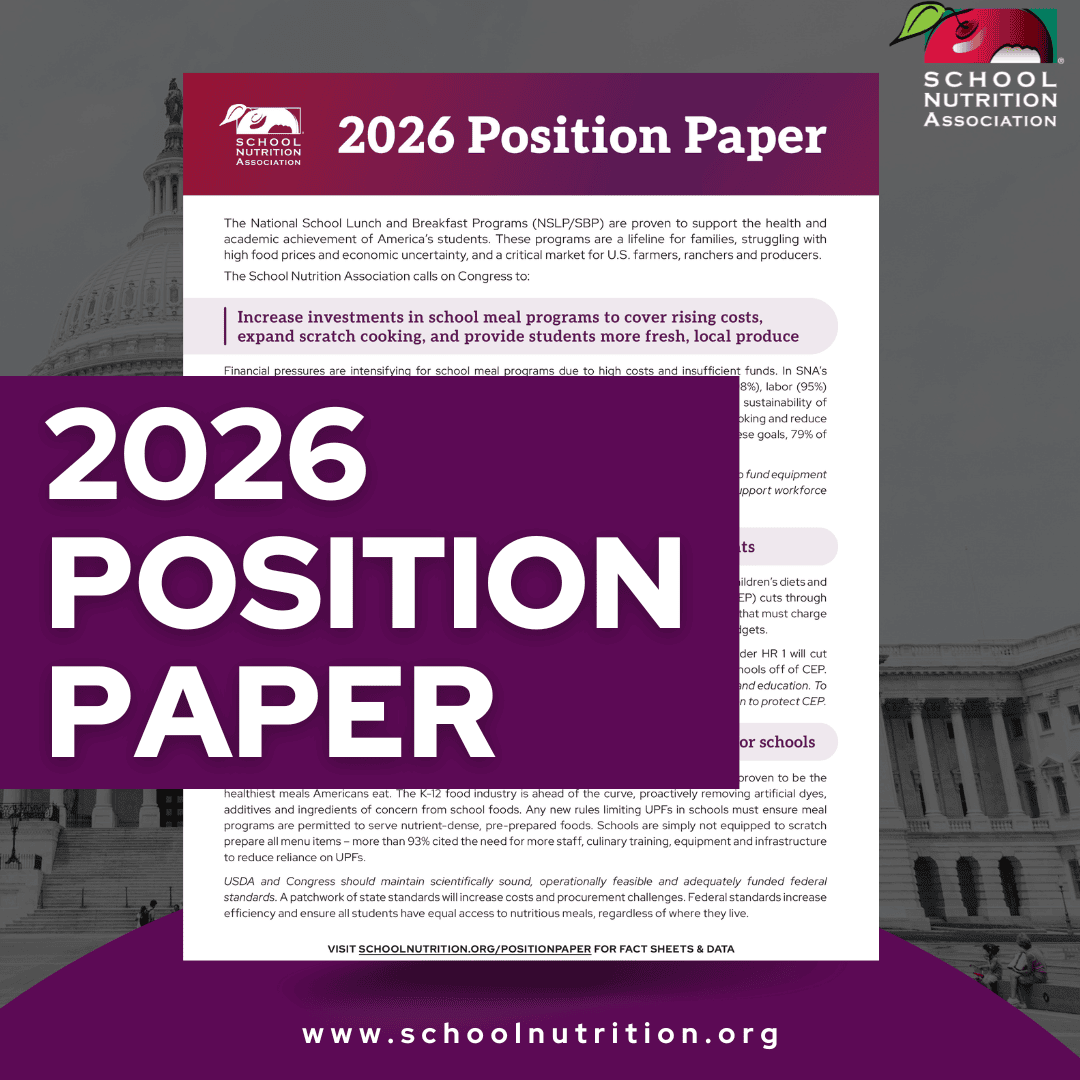
Under current standards, school nutrition professionals have dramatically increased the amount of whole foods offered to students, including fresh fruits and vegetables, whole grains, milk and protein, while reducing sodium and added–sugar. Additionally, the K-12 food industry is ahead of the curve, proactively removing artificial dyes, additives and ingredients of concern from school foods, making them healthier choices than comparable options in grocery stores or restaurants. Thanks to efforts like these, school meals are proven to be the healthiest meals Americans eat, and school nutrition professionals are eager to build on this success.
SNA’s national survey indicates nearly three-quarters (73%) of responding school meal programs are working to offer more local foods with school meals, and 71% reported offering scratch prepared entrees on at least a weekly basis.
However, schools cite numerous challenges to their efforts to expand scratch preparation and reduce reliance on ultra-processed foods (UPFs). Large majorities of program directors indicated a need for increased resources to achieve these goals:
- Virtually all (99%) reported needing more funding, with 79% expressing an “extreme need” for increased funds.
- Respondents also cited a need for more staff (94%), culinary training (95%), equipment and infrastructure (94%).
School nutrition standards must align with the Dietary Guidelines for Americans (DGAs), which now recommend limiting highly-processed foods. Any new rules must ensure meal programs are permitted to serve nutrient-dense, pre-prepared foods. These K-12 menu options have a far better nutrient profile than typical commercial and retail versions. For example, school kitchens that lack adequate staffing and equipment to prepare and roll burritos from scratch can obtain nutrient-dense pre-prepared burritos, made with low-sodium beans, low-fat cheese and whole grain tortillas.
Schools must also receive adequate time to successfully implement new rules – 96% of survey respondents cited a need for more time to test recipes.
USDA and Congress should maintain scientifically sound, operationally feasible and adequately funded federal standards. A patchwork of state standards will increase costs, administrative burdens and procurement challenges for school meal programs. Rather than researching and developing a multitude of new recipes to meet varying state rules, manufacturers may decide to exit the K-12 market altogether. Federal standards avoid this unintended consequence, increasing efficiency and ensuring all students have equal access to nutritious meals, regardless of where they live.