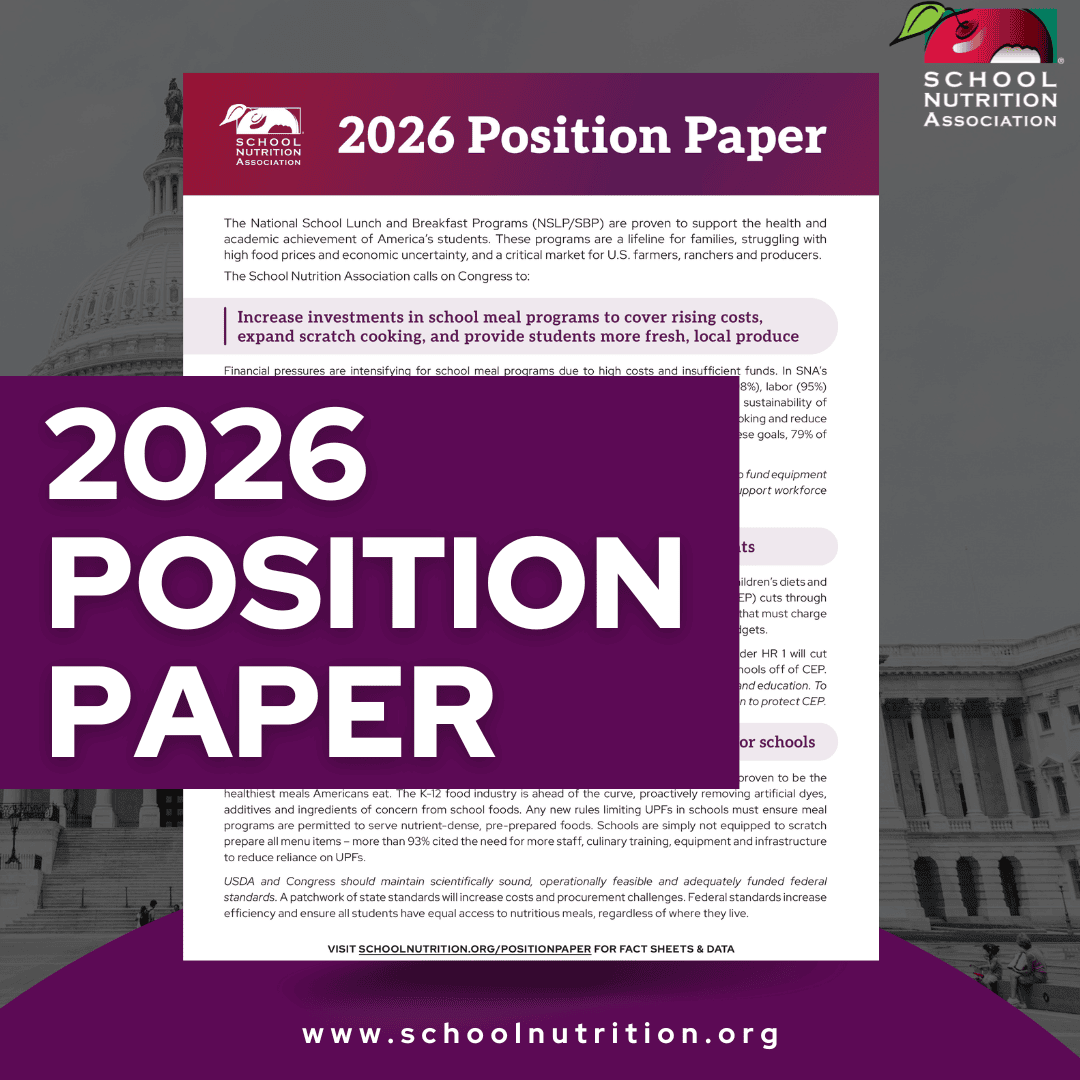
The National School Lunch and Breakfast Programs (NSLP/SBP) are proven to support the health and academic achievement of America’s students. These programs are a lifeline for families, struggling with high food prices and economic uncertainty, and a critical market for U.S. farmers, ranchers and producers. The School Nutrition Association calls on Congress to:
- Increase investments in school meal programs to cover rising costs, expand scratch cooking, and provide students more fresh, local produce
Financial pressures are intensifying for school meal programs due to high costs and insufficient funds. In SNA’s recent survey of meal program directors, virtually all reported challenges with the cost of food (98%), labor (95%) and equipment (95%), prompting more than half to express “serious concern” about the financial sustainability of their program in three years. School nutrition professionals have been working to expand scratch cooking and reduce reliance on ultra-processed foods (UPFs), and when asked about necessary resources to further these goals, 79% of respondents reported an “extreme need” for increased funding.
Congress should pass HR 5753 to increase federal reimbursement rates for school meals and HR 5731 to fund equipment and infrastructure upgrades. Congress should also pass bills to boost local food purchases and to support workforce development. Learn More
- Protect and expand access to healthy school meals for all students
School meals support academic achievement, student health and obesity prevention by improving children’s diets and combatting hunger. Offering free meals to all students through Community Eligibility Provision (CEP) cuts through red tape and ensures all children are nourished for success, without stigma. Among school districts that must charge for meals, 92% reported having unpaid student meal debt, a burden for both families and school budgets.
Upcoming changes to the Supplemental Nutrition Assistance Program (SNAP) and Medicaid under HR 1 will cut the number of children automatically certified for free and reduced-price school meals, forcing schools off of CEP. Congress should provide every student access to free, nutritious school meals to support their health and education. To advance this goal, SNA urges Congress to pass S 3281, repealing HR 1’s SNAP provisions, and legislation to protect CEP. Learn More
- Ensure updates to federal school nutrition standards are feasible for schools
Under current federal standards, which limit calories, sodium and added-sugar, school meals are proven to be the healthiest meals Americans eat. The K-12 food industry is ahead of the curve, proactively removing artificial dyes, additives and ingredients of concern from school foods. Any new rules limiting UPFs in schools must ensure meal programs are permitted to serve nutrient-dense, pre-prepared foods. Schools are simply not equipped to scratch prepare all menu items – more than 93% cited the need for more staff, culinary training, equipment and infrastructure to reduce reliance on UPFs.
USDA and Congress should maintain scientifically sound, operationally feasible and adequately funded federal standards. A patchwork of state standards will increase costs and procurement challenges. Federal standards increase efficiency and ensure all students have equal access to nutritious meals, regardless of where they live. Learn More

Category
Resource Type
Year Added
2026