

Get students involved in the celebration with creative School Lunch Hero Day activities—from coloring sheets and greeting cards to comics, videos, and a student‑signed apron craft that shows heartfelt appreciation for school lunch heroes.
Read More
Download the official School Lunch Hero Day artwork by Jarrett J. Krosoczka and add creative flair to your celebrations, promotions, and thank-you materials.
Read More
For less than $4.70 per meal, school nutrition programs must stretch funding to cover not only food, but also labor, equipment, utilities, training, and essential services. School meals are not just food—they represent a comprehensive system that supports student health and learning.
Read More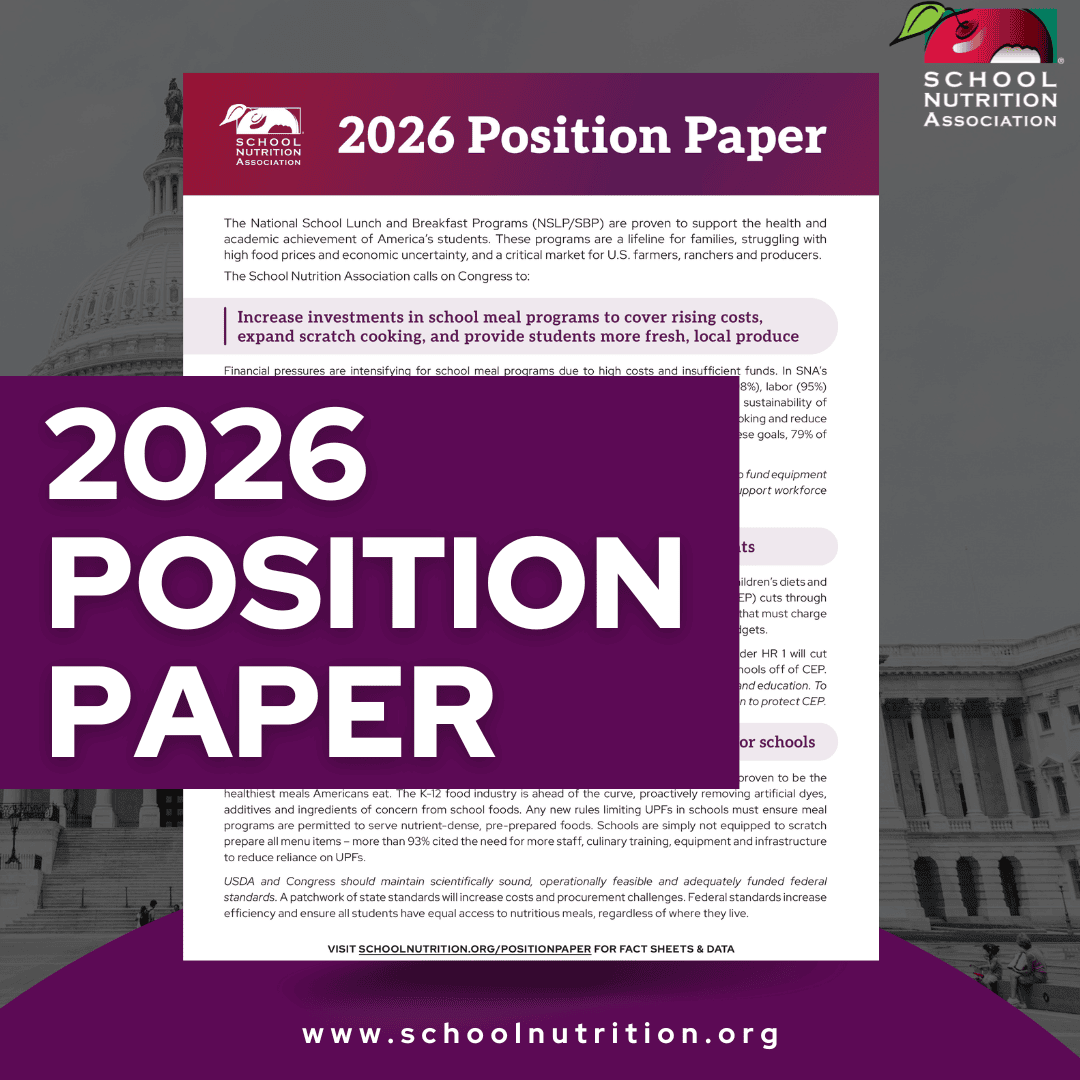
While school nutrition programs are making significant strides in offering healthier meals, they are severely constrained by insufficient funding, which limits their ability to expand scratch cooking, provide more fresh, local produce, and meet increasing financial pressures from rising food, labor, and equipment costs.
Read More
Despite the progress in increasing whole foods and reducing ultra-processed foods (UPFs) in school meals, the expansion of scratch cooking and the adoption of new federal nutrition standards face significant barriers, such as inadequate funding, staffing, equipment, and time for proper implementation.
Read More
However, efforts to protect and expand access to healthy school meals for all students face significant challenges due to potential changes in the Supplemental Nutrition Assistance Program (SNAP) and Medicaid under HR 1, which could undermine the federal Community Eligibility Provision (CEP) and reduce the number of students automatically certified for free and reduced-price meals.
Read More
SNA’s 2026 Position Paper calls on Congress to address long-term economic and regulatory challenges for school meal programs.
Read More
In May 2025, more than 100 school nutrition professionals convened at SNA’s first Future of the Industry Summit to discuss the school nutrition field’s current challenges and potential solutions. This…
Read More